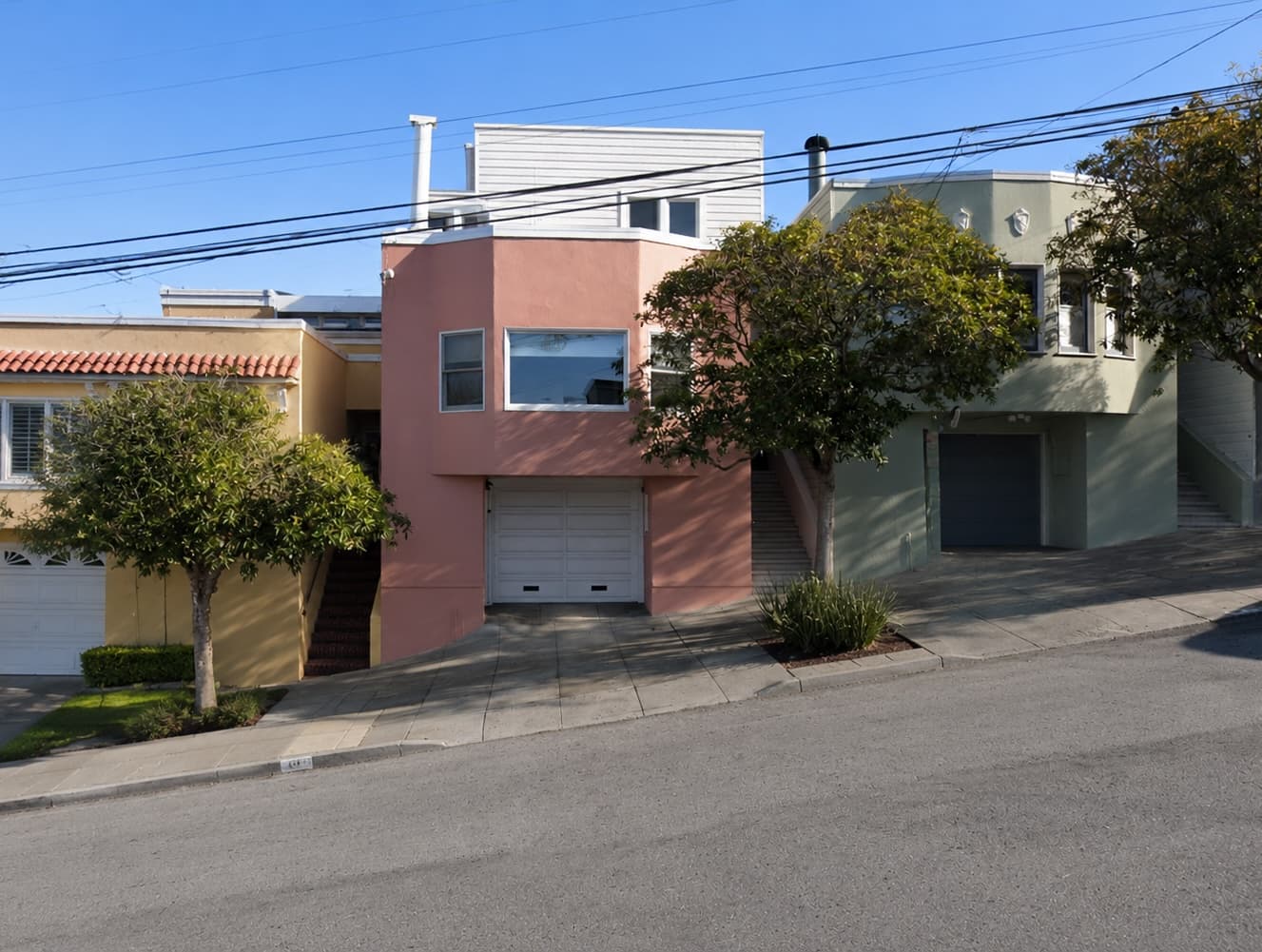
Potrero Hill
“They were very straightforward - clear communication from start to finish, no surprises, install team was awesome and the product works great. The price was much less expensive than other quotes I got for solar and batteries.”
For homeowners who plan in years, not months.
Power that stays on through a shutoff, for about half the long-run cost of PG&E.
No contact info required.

Yes, and in Santa Rosa the case is resilience as much as savings. Owning solar with a battery runs about half the long-run cost of staying with PG&E, whose residential rates have climbed 104% in a decade, and the same battery keeps your home powered through a multi-day fire-season shutoff instead of leaving you to evacuate around an empty refrigerator. Even at today’s rate, before any increase, a typical Santa Rosa home will hand PG&E about $66,000 over the next 25 years, so owning your system turns most of that into a one-time cost.
Reviewed June 2026
The economics turn on PG&E NEM 3.0: the credit for the daytime solar you export is low, so the value comes from storing your own power and using it in the expensive evening rather than selling it back cheap. In Sonoma County that same battery does double duty, covering peak-rate evenings every day and carrying the house through a Public Safety Power Shutoff.
You pay about what a typical Sonoma County quote costs upfront and own the system outright, designed for roughly double the value over its life. No lease, no monthly payment, no escalator.
Yes, and in Santa Rosa the battery earns its keep two ways, which is why we size it generously. Day to day it runs on a soak-and-carry cycle: it fills on your own solar, then powers the air-conditioned evening from storage instead of sending that energy to the grid for the low NEM 3.0 export credit. Then, when fire season brings a multi-day Public Safety Power Shutoff, the same battery islands the house and keeps it running, recharging from the sun each day. Panels alone do neither; they shut off the moment the grid goes down.
We size the storage to ride out a multi-day shutoff, not just trim a bill. Most homes here buy generation from Sonoma Clean Power while PG&E still handles delivery and billing, and you stay on the same NEM 3.0 Solar Billing Plan rules either way.
Yes. Inland Sonoma summers are long, hot, and clear, and a Santa Rosa roof makes about 1,500 kWh per kW installed each year, right in the Bay Area norm. Sun is not the constraint here; the design question is fitting enough storage to cover both the air-conditioned evening and a multi-day shutoff. The home itself matters too: the area’s newer, 1980-median housing is more electrically ready than the coast, though older ranch stock can still need a panel upgrade the design works around.
Homes range from older ranch stock to whole neighborhoods rebuilt after the 2017 fires, so we design for the load the home is heading toward: air conditioning, an EV, and a heat pump, added through a smart panel rather than a costly PG&E service upgrade.
Most Potrero projects in Santa Rosa land between $20,000 and $55,000, with payback around 5 to 12 years, because a system built for NEM 3.0 and fire-season backup includes a battery, not just panels. A panels-only quote runs less but covers neither the evening savings nor a Public Safety Power Shutoff. Your real figure depends on your roof, your PG&E usage, and how much backup you want, so the instant estimate uses your address to return a price and system size with no contact information required.
For context, a typical Santa Rosa home pays about $220 a month to PG&E today, more than the coast once summer air conditioning is running, on a bill that has risen 104% in a decade. The 30% federal residential solar tax credit closed at the end of 2025, so the price you see is the price. Potrero is a licensed California electrical contractor, CSLB number 1147463.
More than the coast, about 10 hours a year once the major-event days are counted, and the reason is wildfire. Sonoma’s everyday grid is roughly average, but the fire and storm years land far harder here than on the coast, and that tail is what you size backup around.
That tail is fire. Santa Rosa’s eastern hills, neighborhoods like Fountaingrove and Oakmont, sit in CPUC Tier 3 extreme fire-threat districts, where fire season can still bring a Public Safety Power Shutoff. The county was hit hardest at the 2019 peak: in 2017 the Tubbs Fire burned into Santa Rosa itself, destroying entire neighborhoods like Coffey Park, and in 2019 the Kincade Fire ignited during a shutoff and forced evacuations across the city. PG&E’s grid hardening has eased the shutoffs since, but the wildfire risk that drives them has not gone away.
Rooftop solar alone does not help in an outage: grid-tied panels shut off for the safety of line crews, so a full roof still goes dark. A battery sized for whole-home backup islands the house automatically, runs the circuits that matter, and recharges from the sun each day, so a multi-day shutoff is something you ride out rather than evacuate around. We also pre-charge the battery from the grid when PG&E forecasts a shutoff, so you go in at a full charge.
We do not yet have enough completed Santa Rosa projects to publish a local median, so we will not invent one. Across our Bay Area work the hands-on steps are quick, and the wait is mostly PG&E Permission to Operate, the long pole that sits with the utility, not the build.
Your address, roof, and PG&E baseline return a real price and system size, no contact information required.
A designer finalizes the layout and quote against your PG&E usage and backup goals; you sign and put 2% down, with nothing ordered yet.
We confirm the roof, main panel, and battery location on site, size the storage for a multi-day PSPS, and reconcile any changes before we build.
We pull the same-day SolarAPP+ permit, order materials, and install the panels, EG4 battery, and smart panel.
The city inspects and PG&E grants Permission to Operate, then the system switches on and islands automatically the next time a shutoff or storm takes the grid down.
The best installer for a Santa Rosa home is one licensed in California, fluent in PG&E NEM 3.0 and fire-season backup, and willing to show you a price before you commit. Potrero is a licensed California electrical contractor, CSLB number 1147463, that designs solar, a battery sized for a multi-day shutoff, and a smart panel as one system you own outright, and publishes an instant estimate you can run on your own address without handing over your contact information. Its Bay Area installs hold a 5.0 homeowner rating on Google.
We build on open, non-proprietary hardware rather than a single vendor’s locked box, so the system can grow with an EV charger, a heat pump, or a backup generator instead of being torn out in year eight. The four things below are what that looks like in a design.
Every design decision is made to lower your cost over the long run.
Same upfront price as the typical Santa Rosa quote. Roughly double the value over the long run.

“They were very straightforward - clear communication from start to finish, no surprises, install team was awesome and the product works great. The price was much less expensive than other quotes I got for solar and batteries.”

“Production is right where they said it would be, and we've already had a PG&E power outage where the whole-home battery backup worked flawlessly.”

“The value proposition is bang on. Installation was really professional. And the service is amazing.”

“Potrero Solar was an easy and economical decision for us. The team took great care of us throughout the process, with excellent planning and installation services despite our tricky layout.”

“They were extremely respectful of our old house and went the extra mile to find the best placement for all the new equipment they installed.”

“This is a fantastic company. They have an unbeatable price and really great customer service. Their crew is great.”

“Even after installation, they’ve continued supporting me to optimize performance.”

“I highly recommend Potrero energy for your solar. They did a good job and it works great!”

“They were very straightforward - clear communication from start to finish, no surprises, install team was awesome and the product works great. The price was much less expensive than other quotes I got for solar and batteries.”

“Production is right where they said it would be, and we've already had a PG&E power outage where the whole-home battery backup worked flawlessly.”

“They were very straightforward - clear communication from start to finish, no surprises, install team was awesome and the product works great. The price was much less expensive than other quotes I got for solar and batteries.”

“Production is right where they said it would be, and we've already had a PG&E power outage where the whole-home battery backup worked flawlessly.”

“The value proposition is bang on. Installation was really professional. And the service is amazing.”
Yes. Sonoma Clean Power supplies your generation while PG&E still handles delivery, the meter, and billing, and you stay on PG&E NEM 3.0 Solar Billing Plan rules either way. Your solar credits and charges appear on the same PG&E bill. We design the system around those rules whether your generation comes from Sonoma Clean Power or PG&E.
How solar works under NEM 3.0 (opens in a new tab)For most market-rate homeowners, no. The SGIP battery rebate tiers that ordinary homeowners used closed to new applicants at the end of 2025. The one pathway still open in 2026 is an income-qualified program that has been heavily subscribed and waitlisted. We will check whether you qualify and tell you plainly if you do not, then size the battery so it pays off on backup and bill savings rather than on a rebate you cannot count on.
SGIP in 2026, explained (opens in a new tab)Yes. We build on open, non-proprietary hardware, so a backup generator, fuel cell, or EV charger plugs into the system you already own, and our software coordinates them through one app. For a Santa Rosa home that wants insurance against an unusually long shutoff, a generator can top off the battery; for most homes, storage sized to a multi-day PSPS and recharged from the sun each day is enough on its own.
See the hardware we install (opens in a new tab)Often not. Santa Rosa housing stock skews newer than the coast, and the neighborhoods rebuilt after the 2017 fires have nearly new roofs. Where a roof is within about five years of replacement, we recommend re-roofing first, since removing and reinstalling panels later costs far more than doing it once. On the site visit we check the roof age, condition, and structure and flag any re-roof or reinforcement up front, so it is in the plan and the price rather than a surprise mid-install.
The EG4 batteries we install carry a 10-year manufacturer warranty and an 8,000+ cycle design life, which at about one cycle a day is more than twenty years of use, and the lithium-iron-phosphate (LFP) chemistry degrades slowly. Your panels carry a 30-year warranty, and Potrero adds its own 10-year workmanship warranty covering the labor and roof penetrations, so the install itself is backed, not just the parts. We install and register each component to spec, which is what keeps the manufacturer warranties intact.
See the hardware and warranties (opens in a new tab)The decisions behind a Santa Rosa system, explained in depth.
How whole-home backup and recharge-from-sun get you through a multi-day PSPS.
Why Sonoma County gets shut off, and how to prepare the system ahead of one.
Why the battery, not the panels, is the load-bearing part of the system.
California battery rebate, and why a battery now has to pencil on its own.
An instant estimate uses your address, roof, and PG&E usage to show a real price and system size. No contact information required to start.